
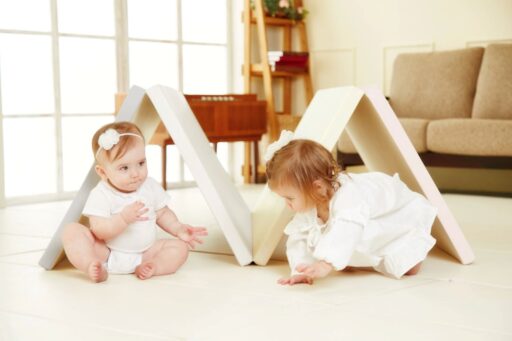


A baby play gym is more than just a colorful mat spread across the floor. In practice, it becomes one of the very first spaces where a baby starts to explore the world on their own terms. It is a developmental tool designed to support early physical and cognitive growth, and in a way, it really does function like a baby’s first office. Historically, play gyms have come a long way, evolving from simple wooden frames in the mid-20th century to today’s thoughtfully designed, multi-sensory setups.
For new parents especially, choosing the right one can feel overwhelming. There are a lot of options, and many of them look similar at first glance. This guide breaks the decision down into five practical steps, focusing on the features that turn a basic mat into a modern developmental powerhouse.
Step 1: Prioritize High-Contrast and Sensory Elements
Modern developmental science suggests that newborns have limited color vision. For the first few months, babies primarily see black, white, and shades of gray, with brighter colors gradually becoming clearer over time.
Start by looking for high-contrast patterns. Gyms that include strong visual stimuli, especially black-and-white graphics or bold primary colors, tend to be more engaging during those early weeks. Subtle pastels may look nice to adults, but they are often less effective for newborn eyes.
Next, take a moment to audit the textures. A well-designed gym usually combines materials like crinkle paper, silky fabrics, and soft plush elements. These variations support tactile processing, which is how babies begin to understand and interpret different sensations through touch. It may seem like a small detail, but texture variety matters more than many parents initially expect.
Audio features are another area where restraint is important. Gentle rattles or soft squeakers are ideal. Loud electronic noises or flashing lights can easily overstimulate a developing nervous system, and in some cases, they end up being more distracting than helpful.
Step 2: Ensure an Ergonomic and Supportive Mat
The play mat is the foundation of the entire gym, especially when it comes to tummy time. Pediatricians consistently emphasize tummy time as a critical exercise for strengthening a baby’s neck, shoulders, and upper body.
Cushioning thickness should strike a careful balance. The mat needs to be thick enough to protect a baby from hard floors, yet firm enough so they can push up without sinking. Mats that are too soft may actually make tummy time more frustrating.
Material safety is non-negotiable. Babies spend a surprising amount of time with their faces pressed against the mat, so it is important to choose non-toxic fabrics. Certifications such as OEKO-TEX or clearly labeled BPA-free materials are good indicators that safety has been taken seriously.
Machine washability is another practical consideration that parents often learn to appreciate quickly. Spit-ups, diaper leaks, and the occasional mess are inevitable. A mat that detaches easily and can be tossed into the washing machine will save time and stress later on.
Step 3: Select an Adjustable and Versatile Arch
The overhead arch, which holds the hanging toys, should adapt as a baby grows. In the earliest stage, babies mostly bat at toys. Before long, they begin to grasp, pull, and explore more deliberately.
Adjustable height is a key feature to look for. Being able to raise or lower the arch allows the gym to remain useful across different developmental phases, rather than becoming obsolete too quickly.
Toy detachability also adds flexibility. Removable toys can be clipped onto a stroller or brought into the car, giving the baby a familiar sensory item in new environments. This small feature can be surprisingly comforting for both baby and parent.
Some gyms also include peripheral loops around the sides of the mat. These encourage babies to reach sideways or roll over, which supports the development of gross motor skills. It is not essential, but it is a thoughtful addition that extends the gym’s usefulness.
Step 4: Confirm Safety and Stability Standards
Once a baby starts rolling more vigorously or attempting to pull themselves up, stability becomes the most critical consideration.
Begin by inspecting the base. A wide, slightly weighted base helps prevent tipping, especially during energetic movement. Lightweight frames may look sleek, but they are not always the safest option.
Check all fasteners carefully. Hanging toys should be secured with sturdy plastic rings or heavy-duty Velcro. Thin strings or loosely tied attachments can pose a strangulation risk and should be avoided altogether.
Non-slip features are another detail worth checking. A grip texture on the underside of the mat helps keep the gym from sliding across hardwood or tile floors, which can otherwise happen more easily than expected.
Step 5: Evaluate Long-Term Growth Utility
A modern play gym should continue to offer value beyond the first few months. Ideally, it supports transitional play as a baby grows into a toddler.
Convertible designs are becoming more common. Some gyms transform into a small play tent or a toddler activity table, extending their lifespan well past infancy. While not every family needs this, it can make the investment feel more worthwhile.
Milestone guidance is another feature often found in higher-end models. Some gyms include simple guides that explain how specific activities support developmental milestones such as reaching, grasping, rolling, or sitting up. For parents who appreciate a bit of structure, this can be genuinely helpful.
Finally, there is aesthetic integration. While it is not a functional requirement, many parents prefer neutral tones that blend with home decor. A gym that looks at home in the living room is more likely to stay out and be used regularly, rather than tucked away after a few weeks.
Summary of Key Concepts
A developmental tool is any object designed to foster physical or mental growth in children.
Tummy time refers to supervised periods when a baby lies on their stomach to build muscle strength.
Gross motor skills involve large muscle movements such as rolling, crawling, and sitting up.
OEKO-TEX is a global certification system that helps ensure textile safety.
Choosing a baby play gym ultimately comes down to balancing safety, developmental value, and practicality. When those elements come together, the gym becomes more than just another baby item. It becomes a space where early curiosity quietly begins to take shape.
Frequently Asked Questions (FAQ)
Q. When should I start using a play gym with my baby?
A. You can start using a play gym almost immediately after birth. While newborns won’t “play” with the toys, the high-contrast patterns and soft mat provide a safe space for them to observe their surroundings and begin short bursts of tummy time.
Q. How long do babies typically use a play gym?
A. Most babies use the traditional overhead arch until they start crawling, usually around 6 to 9 months. However, if you choose a gym that converts into a play tent or mat, it can be used well into the toddler years.
Q. Are wooden play gyms better than plastic ones?
A. Wooden gyms are often praised for their durability and “open-ended” play style. They are generally more aesthetic and eco-friendly. However, plastic gyms often offer more integrated sensory features like lights and music. Both are safe as long as they meet current safety standards.
Q. How do I clean a baby play gym?
A. Most fabric mats are machine-washable on a gentle cycle. Plastic and wooden components should be wiped down with a damp cloth and mild, baby-safe soap. Always air-dry the mat to prevent the internal padding from bunching.